If your office is downtown, choosing where to live is really a game of minutes. Ten minutes closer to transit. Five minutes from groceries. A coffee shop you can reach before the first call of the day. The best downtown Toronto neighbourhoods make the workweek easier without asking you to give up the parts of city life you actually enjoy.
Toronto has so many neighbourhoods to choose from, and no single one is a total win for everyone. The City of Toronto tracks 158 neighbourhoods, which is helpful when you want to compare more than a few listings on a map.
Explore the City of Toronto neighbourhood profiles.
The right pick depends on where downtown actually is for you. Union Station, Bay Street, King West, Queen’s Park, the waterfront, and the hospital district can all mean very different commutes. That’s why the best Toronto neighbourhoods are less about a universal ranking and more about how you want your day to work.
Toronto’s rental market can also shift quickly, so think of this as a shortlisting guide that can help you narrow your options. CMHC’s 2026 outlook for the Toronto CMA expects rental options to increase and two-bedroom rent growth to slow in 2026, while noting that turnover and newer units can still affect average rents.
See CMHC rental market information.
Rental options at-a-glance
These Minto purpose-built rental communities put you in or within easy reach of downtown, with a variety of ways of life in the city.
| Community | Area | Why it may fit |
| 39 Niagara | Downtown West / King West | Close to major downtown employers, restaurants, nightlife, and entertainment. |
| Minto Yorkville | Yorkville / Bloor Corridor | A central address with transit, shopping, dining, and downtown close by. |
| Jameson Avenue Apartments | Parkdale | West end character, lake access, and an easy route toward downtown. |
| High Park Village | High Park | More green space and a calmer home base, with downtown still within reach. |
|---|
Compare available suites, amenities and location details to see which one suits the way you actually live, not just the route your map app suggests.
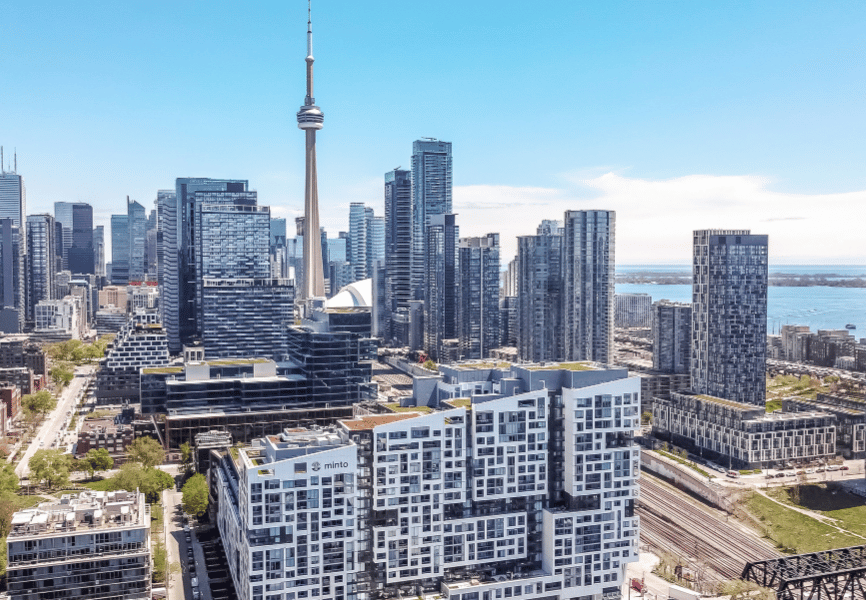
1. St. Lawrence makes downtown feel manageable
St. Lawrence is one of the best neighbourhoods in Toronto for renters who want downtown close, but not necessarily right outside the bedroom window. Just east of the Financial District, it works especially well for offices around King, Bay, Front, and Union.
The neighbourhood has a grown-up city feel without taking itself too seriously. Historic streets sit alongside apartments, condos, cafés, restaurants, groceries, and the waterfront. The big draw is how much of daily life can happen on foot.
Where to look: Older purpose-built rentals, condo rentals and low-rise buildings.
Best fit: Finance, legal, consulting, public sector and tech workers who want a central base with a little breathing room.
Good to know: Central locations get attention. If space matters, compare older rental buildings with newer condo listings.
2. Harbourfront puts the lake at the end of the workday
For a commute that ends with a view of Lake Ontario, Harbourfront makes a convincing case. Union Station, the Financial District, South Core, and the university corridor are all within easy reach, while the waterfront gives the neighbourhood a completely different feel once work is done.
For renters comparing the best places to live in Toronto, this area is especially appealing if walkability, condos, trails, concerts, and sports are high on the list. Some pockets are more tower focused than main street oriented, so the exact building matters.
Where to look: High-rise rentals and condos near the lake. Check groceries, visitor traffic, and how the building works day-to-day.
Best fit: Renters who like city living with a waterfront reset built in.
Good to know: Lake views are lovely. Winter can be much colder with the lake effect. Visit the block in the conditions you’ll actually be walking in.
3. King West keeps work and play on the same map
King West has long been one of the best neighbourhoods for young professionals, and it’s easy to see why. Offices, restaurants, bars, gyms, entertainment, and newer rentals all sit close together, so the commute home can be measured in blocks instead of episodes of a podcast.
Among Toronto downtown neighbourhoods, King West is a natural fit for anyone who wants after work plans to be genuinely after work, not after a 50-minute trip home.
Where to look: Purpose-built rentals and condos. If you’re close to the busier stretches, pay attention to soundproofing and unit orientation.
Best fit: Young professionals, tech workers, hospitality workers, and social types who like having options close by.
Good to know: Friday night King West and Tuesday morning King West are two different creatures. Visit at both times before choosing your block.
A Minto option nearby: 39 Niagara 4. Queen West and Trinity Bellwoods bring the personality
If your ideal neighbourhood includes independent shops, vintage finds, cafés, galleries, patios, and a park that can feel like Toronto’s unofficial living room, then Queen West, and Trinity Bellwoods belong on the list.
They’re often named among the best neighbourhoods to live in Toronto because the area feels distinctly local while keeping downtown jobs within a manageable ride, bike, or walk depending on where you land.
Where to look: Low-rise apartments, rentals above shops, house conversions, and condos.
Best fit: Designers, media workers, freelancers, food lovers, and anyone who would choose character over modern and slick.
Good to know: Older buildings can be charming but check heating, laundry, maintenance, and soundproofing before you make your decision.
5. The Annex does Old Toronto without feeling old fashioned
The Annex mixes mature streets and historic homes with bookstores, restaurants, cafés, and university life. It’s especially handy for anyone working near the University of Toronto, Queen’s Park, the hospitals, Yorkville, or the north side of downtown.
Among Toronto Canada neighbourhoods people often search when planning a move, The Annex stands out because it feels like a neighbourhood first and a downtown address second. The TTC line 2 connects all of Bloor Street, while line 1 access makes it simple to get downtown to the Fashion District or Financial district, or to north Toronto. Designated bike lanes on Bloor are used for weekend rides or easy commuting above ground.
Where to look: House conversions, low-rise apartments, boutique apartments, and condos.
Best fit: Grad students, health care workers, academics, and professionals who want character with easy city access in a high-quality neighbourhood.
Good to know: Rentals can vary from one converted house to the next, so look beyond the pretty front porch.
6. Church-Wellesley keeps the whole core close
Church-Wellesley puts a lot of downtown within walking distance, with transit and bike routes adding even more options. That makes it one of the downtown neighbourhoods that works well when your schedule changes from day to day.
Restaurants, nightlife, and local businesses give the area a lively social side too, so home does not feel like a place you only see on the weekends.
Where to look: Purpose-built rental towers and condos, especially around Yonge and nearby east-west streets.
Best fit: Downtown professionals, health care workers, students, and renters who want a central address with a social side.
Good to know: The feel can change quickly from block to block. An evening visit is a smart addition to the apartment tour.
7. Cabbagetown and St. James Town offer two takes on central living
Cabbagetown brings Victorian streets, local shops, and a village feel. Next door, St. James Town has a denser mix of apartment towers and rental options. Together, they give renters more ways to stay central without limiting the search to the downtown core.
Both can work well for commutes to the Financial District, hospitals, universities, and government offices, especially when location matters more than having the newest building on the block.
Where to look: Larger rental towers in St. James Town, plus house conversions and smaller buildings in Cabbagetown.
Best fit: Renters who want central access and more variety in building type and price point.
Good to know: Building management and the feel of the immediate block matter. Tour at different times and ask specific questions about maintenance and laundry.
8. Corktown and the Canary District keep things a little calmer
Corktown and the Canary District offer an east side version of downtown life with newer buildings, parks, new trails, and easy access to the Distillery District, St. Lawrence Market, and the waterfront.
They’re especially convenient if work is around King East, Union, or the east side of the Financial District. Depending on the address, walking and biking can be as useful as transit.
Where to look: Newer condos and rental buildings near parks and trail routes.
Best fit: Professionals, dog owners, and renters who like newer buildings without being in the middle of the busiest downtown blocks.
Good to know: Some pockets are still changing. Check grocery options, nearby construction, and the route home after dark.
9. Liberty Village is built around a west side workday
Liberty Village is a popular base for people working in tech, media, marketing, design, and startups. It’s not technically the downtown core, but for west side offices it can make a lot of practical sense.
Condos, gyms, cafés, restaurants, and everyday services are packed into a compact area. If your office is closer to Union or the east Financial District, do a weekday test run before signing anything. Toronto traffic has a way of throwing big curveballs any time of day.
Where to look: High-rise rentals and condos, with different levels of activity depending on the pocket, as well as house conversions.
Best fit: Young professionals, young families, and people working on the west side of the city core.
Good to know: Commute bottlenecks are the main thing to test in real life, not just on a Sunday afternoon. Most public transportation is on bus and streetcars, or on designated bike lanes.
10. Leslieville and Riverside make east end life feel local
Leslieville and Riverside, nestled on the East side of the downtown core, are easy to love if your version of city life includes cafés, restaurants, breweries, parks, dog walks, and neighbourhood shops. They feel residential and social at the same time, with enough personality to make Saturday errands feel less like a chore.
They’re often included in lists of the best areas to live in Toronto Canada for renters who want a real neighbourhood feel while keeping downtown accessible.
Where to look: Apartments above shops, house conversions, low rise buildings and some newer condos.
Best fit: Creative professionals, couples, dog owners and food lovers who are happy to trade a tower heavy streetscape for more local character.
Good to know: Travel time depends heavily on the route and time of day. If punctuality is sacred, test the actual commute.
11. Yorkville puts polish within walking distance
Yorkville is known for upscale dining, shopping, and a polished city feel, but the practical benefit is location. Bloor, the university corridor, Queen’s Park, and the north side of downtown are all close, with subway transit on line 1 or line 2 ready for the rest.
For professionals who want errands, restaurants, and work to fit into a compact daily radius, Yorkville earns its place among the best places to live in Toronto.
Where to look: Purpose-built rentals and condos. Compare amenities with the things you’ll actually use every week.
Best fit: Professionals who want a central address, an active streetscape, and a walkable routine with notable restaurants and shopping.
Good to know: The premium is part of the package. Decide whether location, space, or building amenities matter most before comparing listings.
12. Parkdale gives the west end more room to roam
Parkdale, including the Jameson Avenue area, can open up more rental variety while keeping downtown and Liberty Village within reach. The lake and High Park are nearby, local restaurants are part of the fabric of the neighbourhood, and major west end routes lead toward the core. It feels lived in rather than polished, which is exactly the appeal for many renters.
Where to look: Purpose-built rentals, older walk ups, and house conversions.
Best fit: Renters who want west end character, local food, and a downtown commute without living in the core and its rental prices.
Good to know: This is another neighbourhood where the immediate block matters. Visit morning and evening and investigate building management before deciding.
13. High Park makes room for trees
High Park is one of the best places to live in Toronto for renters who want nature close enough to become part of the routine, not a weekend expedition. The park, trails, and quieter residential streets give home life a different pace while transit keeps downtown accessible.
For anyone comparing Toronto neighbourhoods and wondering whether city life must mean living right in the core, High Park is a very convincing no.
Where to look: Purpose built rentals near the park, plus condos, converted houses, and low-rise apartments nearby.
Best fit: Renters who want trails, green space and a calmer home base without leaving Toronto. Young professionals and families who want quieter streets but easy access to the downtown core, outer Toronto areas, or Pearson International Airport.
Good to know: Living in this area means streetcars and TTC Line 1 are always close by, while getting out of the city is quicker than living in Liberty Village or The Annex.
14. Dufferin Grove and Bloorcourt balance city access with west end ease
Dufferin Grove and Bloorcourt bring together older houses, small and large apartment buildings, bakeries, restaurants, bars, parks, and independent shops – all with a straightforward route toward downtown by designated bike paths, bus, streetcar, or subway.
For renters comparing the best neighbourhoods to live in Toronto, this area is appealing when food, character, and a bit more room in the day matter as much as a downtown postal code.
Where to look: Low-rise rentals, high-rise rentals, walk ups, and house conversions.
Best fit: Renters who want west end culture with a clear path into the core with easy access to the UP Express train or GO Transit trains near Dundas West station.
Good to know: The route is easy to understand, but the time can vary. Do the commute once before making the lease official.
How to choose a Toronto neighbourhood when you work downtown
The best neighbourhoods to live in Toronto look very different depending on your workplace, your schedule, and what you want to come home to. Before signing a lease, run your shortlist through a few real-life tests:
- Commute reliability. A trip that works consistently beats a shorter route that becomes a mystery every time the weather changes.
- Route options. More than one way downtown gives you choices when transit or traffic decides to improvise.
- Your actual work location. “Downtown” is a big word. Union, Bay Street, Queen’s Park, King West, the hospitals, and the waterfront all call for different routes.
The building. Heat, cooling, laundry, elevators, noise, maintenance and management can matter as much as the neighbourhood itself.
The life around it. Groceries, takeout, restaurants, parks, gyms, and the places you use every week should factor into the decision, especially if workdays run long.
Current rental conditions. Compare live active listings in two or three neighbourhoods before applying: New lease rents and incentives can shift, so a little comparison shopping can pay off. Consider the north, south, east, or west-facing direction of the suite.
Frequently Asked Questions
Is a purpose-built rental building better than a condo?
Neither is automatically better. Purpose-built rentals can offer a more consistent rental setup and building management, while condo rentals can vary by owner and building rules. Compare the total monthly cost, the amenities you’ll use, and how responsive management is likely to be.
Does rent control apply in Toronto?
In Ontario, many units first occupied before November 15, 2018, fall under provincial rent increase guidelines, while newer units do not. If that matters to your decision, ask the landlord or property manager when the unit or building was first occupied and how rent increases are handled.
How can I compare buildings while I am still choosing a neighbourhood?
Start with the rental options mentioned above, then shortlist two or three areas and tour a mix of building types in each. Seeing a few options back-to-back makes it much easier to spot what you care about and what you really don’t want.
When should I start looking for a downtown Toronto rental?
Many renters begin several weeks to two months before their move, so they have time to tour, apply, and compare. If your move-in date is fixed or your wish list is very specific, starting earlier gives you more room to choose. Most rentals will know what suites will be available about 2 months ahead of time.
 Share on Twitter
 Share on Instagram
 Share on Linkedin
 Share via email